CNC vs 3D Printing: Which Fabrication Method Is Right for Your Project?
Comparing CNC machining and 3D printing for props, prototypes, and custom fabrication. Learn when to use each method and how Trade Arts combines both.

-2.webp)
-2.webp)

CNC vs 3D Printing: Which Fabrication Method Is Right for Your Project?
Two of the most powerful tools in a modern fabrication workshop are CNC routers and 3D printers. Both produce parts from digital files, but they work in fundamentally different ways — and choosing the right method (or combination) can make or break a build. At Trade Arts, we use both daily, often on the same project. Here's how we decide.
Subtractive vs Additive
CNC machining is subtractive — it removes material from a solid block using a spinning cutter. 3D printing is additive — it builds parts layer by layer from raw filament or resin. This core difference affects everything: speed, finish, strength, geometry, and cost.
When to Use CNC
CNC excels at producing flat panels, structural components, and parts that need clean edges and tight tolerances. It's the right choice when you need repeatable precision across multiple identical parts, smooth flat surfaces without post-processing, structural strength from solid timber, MDF, acrylic, or aluminium, and large-format parts that would take days to 3D print.
We use CNC extensively for signage, set construction, architectural elements, and any build that requires consistent geometry at scale.
When to Use 3D Printing
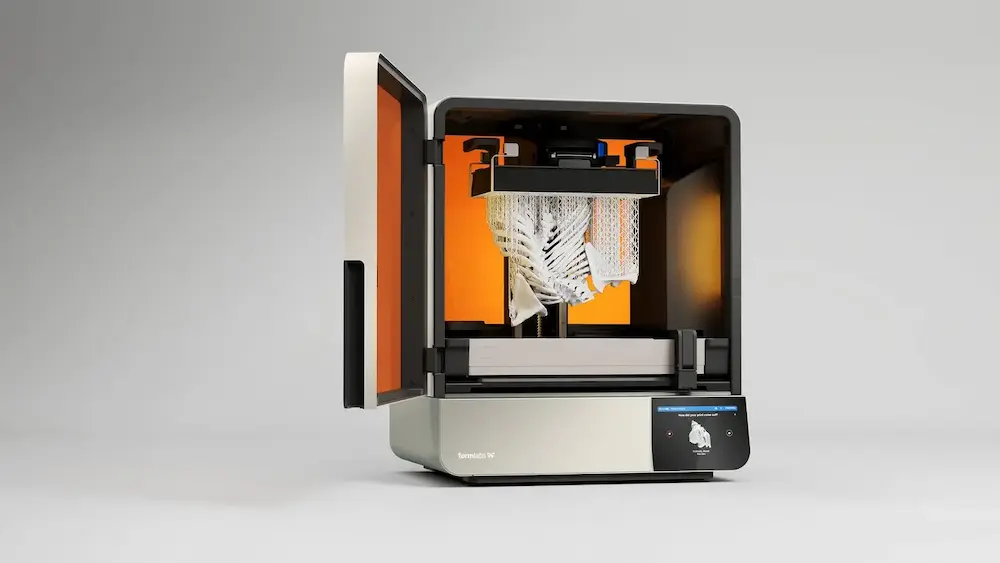
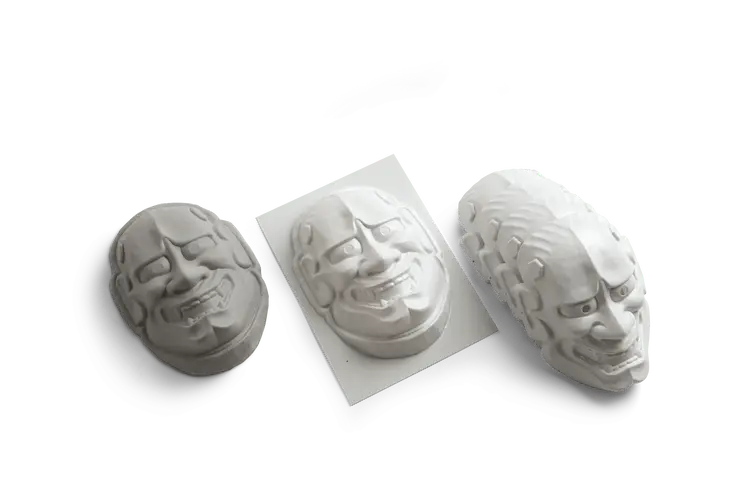
3D printing shines when you need complex organic shapes, undercuts, or internal cavities that would be impossible to machine. It's ideal for sculptural or ornamental elements, small-batch or one-off parts, rapid prototyping and design iteration, and fine surface detail at high resolution (down to 25 microns on our resin printers).
We print hero props, detailed miniatures, mechanical assemblies, and anything that needs to look intricate or handmade.
The Hybrid Approach
Most of our larger builds combine both methods. A common workflow: CNC-cut structural panels form the skeleton of a prop, with 3D printed detail parts bolted, glued, or magnetically attached on top. The CNC parts provide strength and dimensional accuracy; the printed parts add visual complexity. This hybrid method is faster and more cost-effective than relying on either process alone.
Material Considerations
CNC works with sheet and block materials — MDF, plywood, solid timber, acrylic, foam board, aluminium, and composite panels. 3D printing uses filaments like PLA, PETG, and ASA, or resins ranging from standard to engineering-grade. The material choice affects durability, weight, finish quality, and how the part behaves on set or in an exhibition environment.
Finishing and Assembly
Both CNC and 3D printed parts go through our scenic finishing pipeline. CNC parts typically need less surface prep but may require edge sanding and paint. 3D printed parts need layer-line removal, priming, and often multiple coats to achieve a camera-ready finish. Our team handles all of this in-house — the result is a seamless build where you can't tell which parts were machined and which were printed.
Cost and Timeline
CNC is generally faster for large flat parts and cheaper per unit at volume. 3D printing is more economical for small, complex, or one-off parts where tooling setup would be excessive. For most prop and prototype projects, the combination of both keeps the budget realistic and the timeline tight.
Conclusion
There's no single right answer. The best fabrication method depends on geometry, material, timeline, and end use. At Trade Arts, we assess every project holistically and choose the method — or combination — that delivers the best result. If you're unsure which approach suits your build, get in touch and we'll walk through it with you.